Why Dusting Is the Most Important Step in Rug Cleaning (And Why Most Cleaners Skip It)
Your rug looks clean. You vacuum it regularly. There are no visible stains. So it must be fine, right?
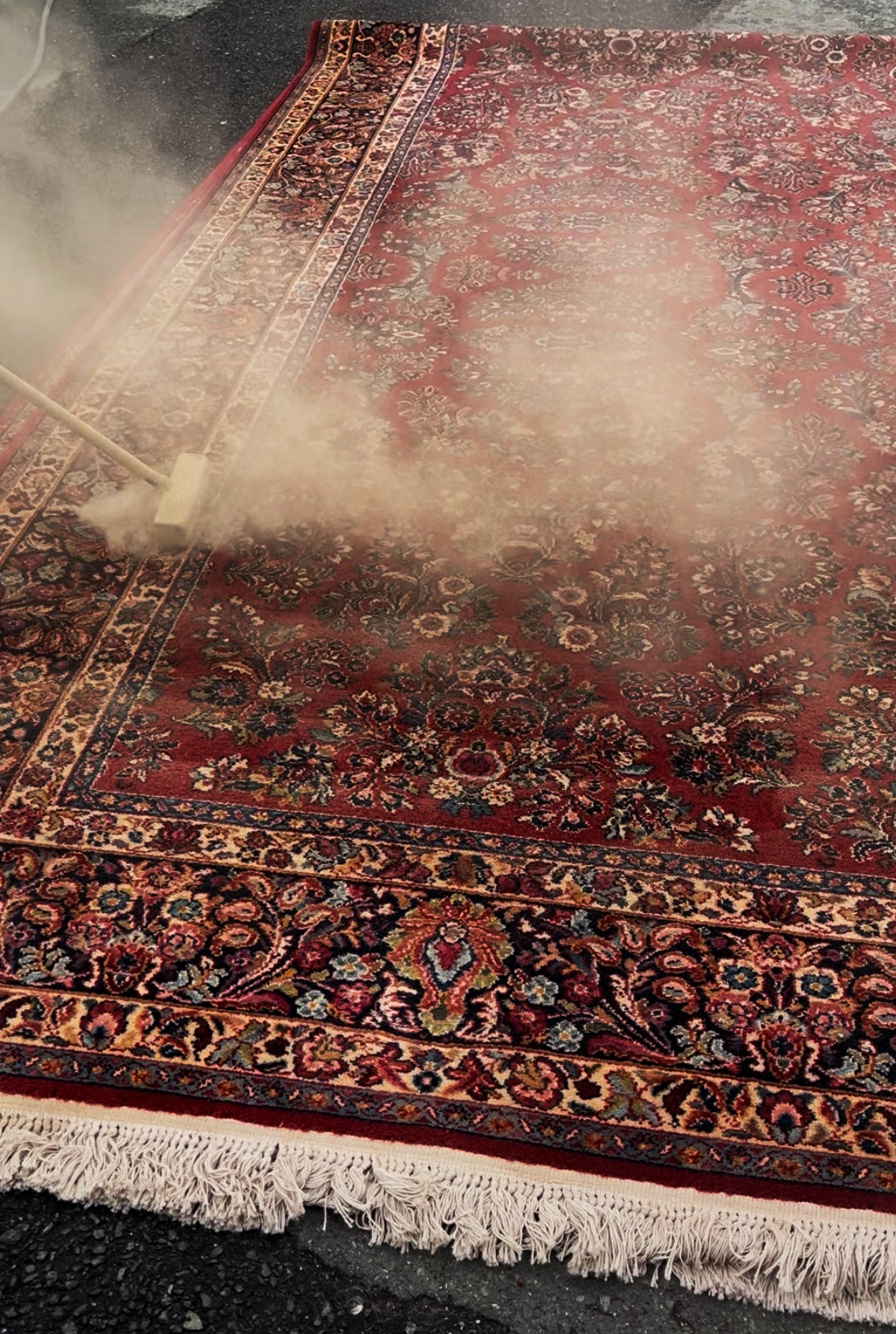
Photo of a large rug going through the dusting process.
Not quite. A standard 8x10 wool rug can hold up to 75 pounds of dry soil and dust before it ever looks dirty. That is not a typo. Seventy-five pounds of debris buried deep in the fibers, invisible to the naked eye, quietly building up over time.
This is why dusting is the single most important step in the cleaning process. And it is a step that most cleaners simply cannot perform.
What Is Rug Dusting?
Dusting is the process of mechanically loosening and removing dry particulate matter from deep within a rug's pile before any wet cleaning begins. We are talking about dust, dirt, sand, allergens, and debris that has settled into the foundation of the fibers over months or years. At Rudy's, we use professional dusting equipment designed specifically for this purpose.
It is the kind of cleaning you cannot see until you see it. And once you do, it is hard to unsee.
Why Your Vacuum Is Not Enough
Vacuuming is an important part of regular rug maintenance and we are not dismissing it. But there is a limit to what a vacuum can do. The suction reaches the surface fibers and removes loose debris sitting on top of the pile. It cannot reach the deep-set particulate matter that has worked its way down into the foundation of the rug over time.
Think of it like washing your hair. Rinsing with water removes surface dirt, but you still need shampoo to clean the scalp. Vacuuming is the rinse. Dusting is the shampoo.
What Happens If You Skip It
Skipping the dusting step does not just mean a less thorough clean. It can actually cause harm to your rug.
• Dust becomes mud. When you introduce water or cleaning solution to a rug that has not been properly dusted, the dry soil absorbs the moisture and turns into a muddy slurry. This can be pushed deeper into the fibers, making it harder or impossible to fully remove.
• Grit damages the pile. Fine sand and particulate matter act like sandpaper on rug fibers. The longer it stays in the rug, the more it wears down and breaks the fibers from the inside out.
• Allergens get cemented in. Dust, pet dander, pollen, and other allergens trapped in the fibers can become bonded to the pile during wet cleaning if they have not been removed first. Your rug may look cleaner, but it is still harboring what was making you sneeze.
Why In-Home Cleaners Cannot Do This Step
This is one of the most important distinctions between in-home carpet cleaning and professional in-facility rug cleaning, and it does not get talked about enough.
In-home cleaners, including truck-mounted steam cleaning systems, go straight to wet cleaning. They have no way to properly dust a rug in your home. The equipment required to do it effectively is not portable. This means that no matter how powerful their system, they are wet cleaning a rug that still has pounds of dry soil embedded in it.
Proper rug cleaning requires bringing the rug to a dedicated facility. It is the only way to do the job right.
We Make It Easy
Rudy's Rug Cleaning has been Charlottesville's only dedicated rug cleaning specialist since the 1960s. Every rug we clean, regardless of size, fiber type, or condition, goes through a full dusting process before any wet cleaning begins. It is not an add-on. It is the standard.
We handle all sizes and offer:
• Convenient pickup and delivery (available on most orders)
• Walk-in drop-off at our Charlottesville facility
If you are curious what is actually living in your rug, give us a call at (434) 296-7166 or stop by. We are happy to talk through what your rug needs.
Your rug deserves more than a surface clean. It deserves a real one.
